
Can you mix live and artificial plants in the same aquarium?

A hybrid aquascape can work in freshwater tanks when live plants are placed where they can grow and fake plants are placed where shape, color, or easier upkeep is wanted. The main rule is simple: do not scatter both types randomly. Separate them by zone so the layout looks intentional and the tank stays easy to clean.
Yes, mix live and artificial plants in the same freshwater aquarium, but keep them in separate zones and match plant density to your light and maintenance level. Poor placement can block light, trap waste, and make fish paths feel cramped or unnatural. This guide shows how to plan mixed plant zones, choose safe materials, and balance layout, lighting, and upkeep.
When a mixed layout works best
When a hybrid layout makes sense
Use a mixed layout when you want live plants for function and cover, but you do not want every area planted heavily. This fits low-tech tanks, beginner setups, and tanks with fish that disturb substrate or nip leaves. A mixed tank can also look mature sooner than a fully planted setup.
If you have limited light or do not want CO2, a hybrid plan lets you keep easy live plants in the best spots and use artificial plants elsewhere. That keeps the tank balanced without forcing every section to behave like a full planted tank.
When to keep the tank fully live or fully fake
Go fully live if you want a planted tank focused on growth, nutrient uptake, and a more natural plant cycle. Go fully fake if you want a simple display with stable shape and no trimming. Mixing works best when you want some of both, not when you expect one plant type to do all the work.
Why choose a hybrid aquascape
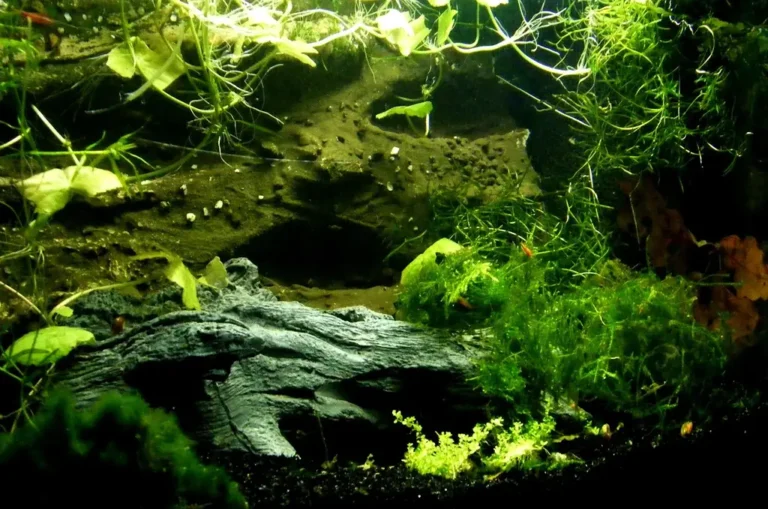
A hybrid aquascape combines live and artificial plants in one tank to balance appearance and upkeep. Live plants help with water quality and shelter. Artificial plants give instant fullness, fixed shape, and predictable spacing. Together, they can create a lush, balanced, colorful, natural-looking tank without demanding a full planted-tank routine.
Live plants for function and cover
Live plants absorb nitrates, phosphates, and other waste products from the water. They also release oxygen through photosynthesis and give fish and invertebrates hiding places and spawning sites. Healthy live plants can help limit excess algae by competing for nutrients.
Artificial plants for shape and low upkeep
Fake plants offer many colors, shapes, and sizes for instant customization. They do not need pruning, fertilizing, or special lighting, and they stay where you place them. That predictability helps when you want a stable layout in a low-tech tank or need a plant mass in a hard-to-grow corner.
Best use cases for beginners and low-tech tanks
Hybrid setups work well for beginners because they reduce the pressure to plant every inch of substrate. They also fit tanks with uneven light, compact filters, or fish that pull at stems. In those cases, live plants can stay in the brighter, calmer zones while artificial plants fill the difficult areas.
Live plants vs artificial plants
Live and artificial plants solve different problems. Live plants need appropriate lighting, species-matched nutrients, and regular pruning. Artificial plants need less routine care, but they can gather algae film and still need cleaning. The right choice depends on light, fish behavior, and how much maintenance you want.
Lighting and nutrient needs
Live plants need suitable aquarium light and a photoperiod that matches the species you choose. Rooted plants such as Amazon Sword and Cryptocoryne also depend on substrate support and nutrients, while Anubias, Java Fern, and Java Moss can be attached to driftwood or rocks. Artificial plants do not need plant-growth lighting.
Maintenance differences
Live plant care includes trimming, removing dying leaves, and checking whether growth is thinning or melting. Fake plant care is lighter: rinse, wipe, and remove algae film when needed. Artificial plants are predictable, but they are not maintenance-free.
Fish shelter and water-quality tradeoffs
Both plant types can give cover, but live plants do more for water chemistry. They help reduce waste compounds and can support a more stable planted environment. Fake plants still help shy fish feel secure, which matters in tanks with bettas, long-finned fish, or nervous community species.
How to plan the tank layout
Plan the tank from hardscape outward. Place rocks and driftwood first, then decide where live plants will root or attach, and finally fill the remaining gaps with artificial plants where growth would be difficult or trimming would be awkward. That order helps the layout read as one design instead of two separate ones.
Use hardscape to separate zones
Rocks and driftwood make clean transitions between live and fake plant zones. A branch can hide the seam where attached Java Fern ends and a group of silk stems begins. Stone can also block direct sightlines, which makes the mix look more natural.
Place rooted plants in stable substrate
Use substrate for rooted live plants such as Amazon Sword, Cryptocoryne, and Vallisneria. Keep the substrate deep enough for stable anchoring, and avoid burying rhizome plants like Anubias and Java Fern. Artificial plant bases can also sit more securely in substrate when the tank floor is level and compacted.
Put fake plants where trimming would be harder
Artificial plants fit corners with weak flow, back edges that are hard to reach, and areas where live stems would shade too much or collect debris. They also work well in foreground pockets where you want visual density without constant pruning.
Mix live and artificial table
| Zone | Placement notes |
|---|---|
| Background live plants | Use Vallisneria or tall stems in the rear corners and back wall. This hides equipment and adds height. Maintenance risk: moderate, because fast growth can block light if you skip trimming. |
| Midground mixed cover | Place Anubias, Java Fern, and a few artificial stems around driftwood. This gives layered cover without crowding the center. Maintenance risk: low to moderate, because algae can settle on slow-growing leaves. |
| Foreground open space | Keep the front open with low live plants or a few small fake accents only. Fish get a clear swim lane, and the tank looks larger. Maintenance risk: low, though detritus is easy to spot here. |
| Driftwood transition | Attach Java Fern or Java Moss to wood, then fade into silk plants nearby. This hides the shift between zones. Maintenance risk: moderate, since moss traps debris if flow is weak. |
| Shaded corner shelter | Use artificial plants in a dim corner where live plants would struggle. This gives shy fish cover without demanding high light. Maintenance risk: low for growth, higher for algae film if the corner has poor circulation. |
| Easy-clean fake plant area | Reserve one back corner for aquarium-safe plastic or silk plants with smooth edges. This gives instant fullness and stable shape. Maintenance risk: moderate, because algae film can build up and needs wiping or brushing. |
What should stay live and what should stay fake?
Choose live plants for the areas that benefit most from growth and water uptake, and choose fake plants where access, light, or fish activity makes live growth harder. Easy live species such as Anubias, Java Fern, Amazon Sword, Cryptocoryne, Vallisneria, and Java Moss are the usual beginner picks.
Beginner live plant picks
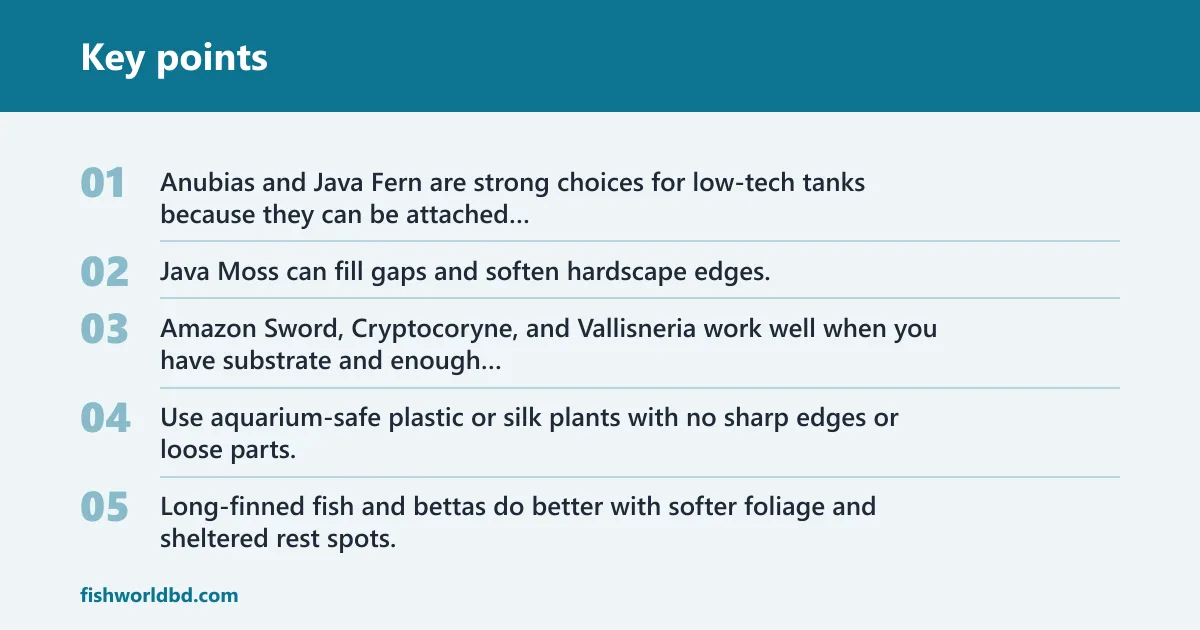
Anubias and Java Fern are strong choices for low-tech tanks because they can be attached to wood or rock rather than buried. Java Moss can fill gaps and soften hardscape edges. Amazon Sword, Cryptocoryne, and Vallisneria work well when you have substrate and enough light for the species.
Artificial plant choices by fish type
Use aquarium-safe plastic or silk plants with no sharp edges or loose parts. Long-finned fish and bettas do better with softer foliage and sheltered rest spots. Plant-nippers may pull at delicate live leaves, so sturdy fake plants can hold shape in the zones they patrol most.
Placement choices for bettas and plant-nippers
For bettas, keep broad leaves and soft cover near the surface, and avoid jagged decor. For plant-nippers, use hardscape and artificial plants in high-traffic sections, then keep easier live plants in protected corners. A common first-timer mistake is crowding the entire tank with tall plants and leaving no clear swimming lane.
A 20-gallon long tank can be set up with a betta, a sponge filter, and one bright side under the light. Put Anubias and Java Fern near the lit half, then use silk plants in the shaded half. That gives the fish rest points and keeps the darker side usable without forcing weak-growth species there.
How do you keep a mixed tank clean?
Keep the routine separate by plant type. Rinse and wipe fake plants, trim live plants, remove dead leaves, and check flow so waste does not settle in the seams between zones. Mixed tanks stay manageable when you treat algae control, pruning, and water checks as different jobs.
Rinsing and wiping fake plants
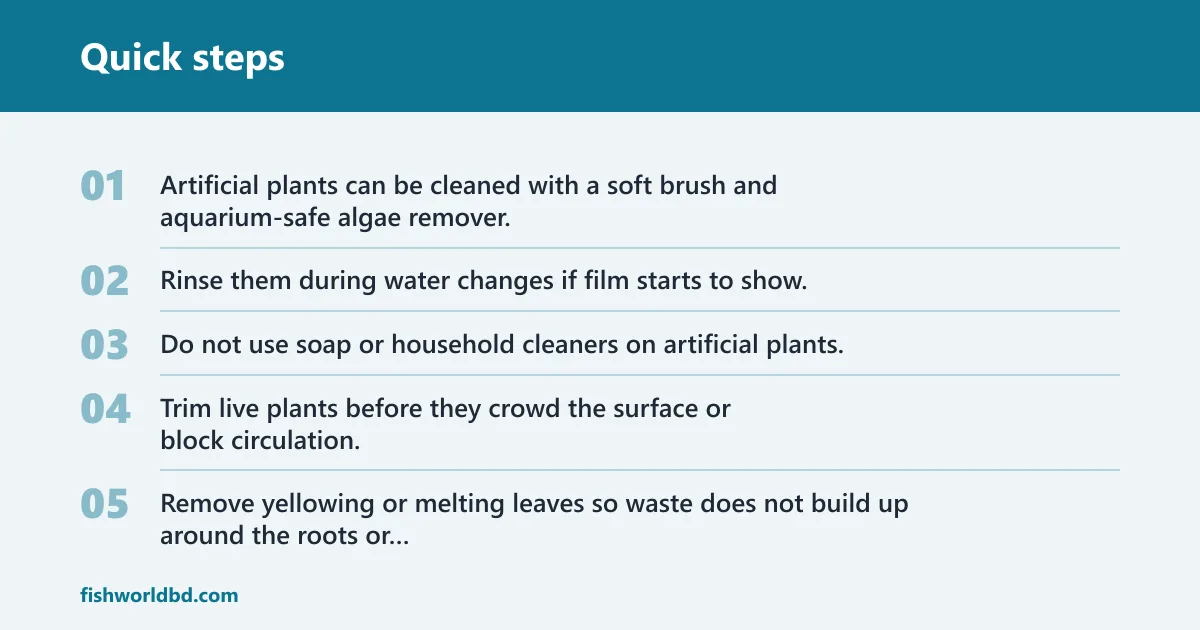
Artificial plants can be cleaned with a soft brush and aquarium-safe algae remover. Rinse them during water changes if film starts to show. Do not use soap or household cleaners on artificial plants, and make sure stems and leaves stay smooth after cleaning.
Trimming live plants and removing dead leaves
Trim live plants before they crowd the surface or block circulation. Remove yellowing or melting leaves so waste does not build up around the roots or rhizomes. Fast growers like Vallisneria may need more frequent trimming than slower plants such as Anubias.
Controlling algae and checking flow
Algae management in mixed tanks starts with light, flow, and waste. Artificial plants can collect algae film if circulation is weak, while live plants can struggle if light is too dim or nutrients are off. Check that water moves through the planted zones and does not leave dead spots behind the decor.
Say your 29-gallon tank has fake plants in the back left corner and a film keeps forming there within days. That usually points to weak flow, not the plant material itself. Move the outlet slightly, clean the corner more often, and keep the area less crowded so debris does not settle as easily.
Frequently asked questions
Can you use artificial plants in a planted tank beginner setup?
Yes. Artificial plants can fill gaps while you learn light, substrate, and trimming patterns. A beginner planted tank often works better with a partial layout than a fully planted one, especially if you want a stable look without committing every section to live growth.
Are artificial plants safe for freshwater fish?
They can be, if you choose aquarium-safe plastic or silk plants with smooth edges and no loose parts. Avoid stiff, sharp, or fragile decor that can tear fins. This matters most for bettas, long-finned fish, and fish that brush through cover often.
Will live plants improve water quality more than fake plants?
Yes. Live plants absorb nitrates, phosphates, and other waste products from the water, and they release oxygen through photosynthesis. Fake plants do not provide that biological function, though they still help fish feel secure and can shape the layout in practical ways.
How do you make live and fake plants look natural together?
Use hardscape to bridge the transition. Put live plants where they can root or attach, then place artificial plants where the hardscape hides the seam. Match leaf size, height, and color to the zone around them so the tank reads as one scene.
Do artificial plants need special cleaning in an aquarium?
They need simple cleaning rather than special treatment. Rinse them during maintenance, brush off algae film, and use aquarium-safe algae remover if needed. They do not need pruning or fertilizing, but they still collect debris and can look dull if ignored.
Can a low-tech tank use both live and artificial plants?
Yes. Low-tech tanks often benefit from a partial planting strategy. Use easy live plants such as Anubias, Java Fern, Cryptocoryne, or Java Moss in the brighter, calmer zones, and use artificial plants where light is weaker or trimming would be inconvenient.