

Aquarium sizes and weights: what to know before setting up

Plan for about 8.34 lb per gallon of water, then add tank, substrate, and equipment. As a quick buying rule, a filled aquarium often weighs close to 10 lb per gallon. Ignore that, and you can buy a stand that sags or a floor that is overloaded. This guide covers footprint, filled weight, stand fit, and floor-load checks before you purchase.
How much does a filled aquarium weigh?
A filled aquarium is the tank plus water plus everything inside it, so the empty tank weight is only one piece of the decision. Use 8.34 pounds per gallon for freshwater water weight, then add the tank itself, substrate, rock or wood, and equipment to estimate the setup you will actually move and support.
Load math basics
Water alone is the easiest part to estimate. A 55-gallon tank filled with water is roughly 458 pounds before glass, gravel, and hardscape are added. That is why filled weight matters more than the empty box weight when you plan a stand, a room, or an upstairs floor.
Filled weight is an estimate, not a factory spec. The chart on this page uses 8.34 pounds per gallon plus substrate and decor, which is why the total can land above the simple water-only math. If you add dense stone or heavy wood, the true setup weight rises again.
Aquarium load planner
| Nominal size | Common reference dimensions, inches | Empty tank weight | Filled-weight estimate | Example setup note |
|---|---|---|---|---|
| 5 gallons | Varies by manufacturer | Varies by model | About 50 lb | Small enough for careful placement, but still verify the stand and surface. |
| 10 gallons | Commonly about 20 x 10 x 12 | 11 lb | 100-120 lb | Water, substrate, and a small filter can bring the setup near the upper end fast. |
| 20 gallons | Commonly about 24 x 12 x 16 or 30 x 12 x 12 | Varies by model | Over 100 lb | Weight can exceed what many desks or dressers are built to carry. |
| 29 gallons | Commonly about 30 x 12 x 18 | Varies by model | Varies by layout | Same gallon count can fit different rooms differently depending on footprint. |
| 40 gallons | Commonly about 36 x 18 x 16 or similar breeder formats | Varies by model | Varies by materials | Stand fit and floor placement start to matter more here. |
| 55 gallons | Commonly about 48 x 13 x 21 | 78 lb | 550-600 lb | A 55-gallon tank can exceed 500 pounds. |
| 75 gallons | Commonly about 48 x 18 x 21 | 140 lb | 800-850 lb | Floor planning becomes a real issue, especially above grade. |
| 90 gallons | Commonly about 48 x 18 x 24 | Varies by model | Varies by layout | Taller tanks raise handling concerns during moving and maintenance. |
| 125 gallons | Commonly about 72 x 18 x 21 | 200 lb | 1300-1400 lb | This is well into dedicated-stand territory. |
| 150 gallons | Varies by manufacturer | Varies by model | Varies by layout | Expect high load and a long delivery path to matter. |
| 180 gallons | Varies by manufacturer | Varies by model | Varies by layout | Confirm the floor path, stand width, and placement before buying. |
Fill-in formula: total setup weight = tank empty weight + (gallons × 8.34) + substrate + hardscape + equipment. If you know the tank’s actual empty weight, that formula gives you a better buying number than gallon count alone.
Say your 40-gallon breeder uses a heavier rock layout than a bare tank. The water weight stays the same, but the real setup can climb fast once substrate and stone are added, so the stand and floor need to match the finished load, not the water volume alone.
What tank footprint fits your space?

The footprint is the length and width on the floor, and it matters more than gallon count for fit. Two tanks can share the same volume but need very different wall clearance, stand width, and room to service the filter, cords, and lids.
Length and width first
Standard rectangular aquarium dimensions vary by manufacturer, so check the exact listing before buying. A 20-gallon long and a 20-gallon high hold the same nominal volume, but the long format spreads that water across a wider base and a lower profile, while the high format uses less floor length and more height.
That difference changes more than appearance. The long version often gives more swimming length and a broader footprint, while the high version can fit a tighter wall span but may leave less room under cabinets, hoods, or shelf overhangs. Measure the actual opening, then leave space for hands and hoses.
Room fit checks before purchase
- Measure the exact floor space, not the wall length alone.
- Confirm the stand will fit the tank footprint with no overhang.
- Leave wall clearance for cords, filter hoses, and cleaning access.
- Check outlet access so cords do not cross walkways or sit under strain.
- Plan the water-change route before the tank arrives.
- Make sure the delivery path clears doors, turns, stairs, and elevator limits.
A common first-timer mistake is buying by gallons, then finding that the tank will not clear a hallway turn or a stair landing. A 29-gallon tank may fit the room on paper, but the stand width, lid clearance, and the route into the room still have to work.
Glass or acrylic: which weighs less?
Acrylic weighs less than glass, while glass is more common and usually feels stiffer in everyday use. Empty tank weight changes by material, trim, and style, so a 75-gallon glass tank and a 75-gallon acrylic tank can need different moving plans and different stand handling.
Material and style differences
Glass tanks are usually heavier for the same footprint. Acrylic tanks are easier to carry, but they can flex more than glass and are more sensitive to surface marks. Rimmed tanks, rimless tanks, and bowfront styles also change handling because the frame or curved front affects how weight is supported and carried.
Trim matters because it changes where load is transferred. A rimmed tank may rely on the frame and perimeter support, while a rimless tank asks for very flat, even support across the base. Bowfront tanks add another fit problem: the curved front can complicate stand choice and room layout.
When lighter acrylic changes the plan
Lighter material helps during a move, but it does not remove the need for a full-support stand or a sound floor plan. Acrylic can make a large tank easier to maneuver through a doorway or upstairs landing, yet the filled setup still carries the same water load plus substrate and decor.
Can your floor handle the tank?
Upper-floor placement needs extra caution because the load is concentrated in one area. A filled aquarium can weigh hundreds of pounds, and the safest plan is to spread that load across a purpose-built stand and place the tank so the floor structure can share the weight as well as possible.
Joist direction and placement
When possible, place the tank perpendicular to the floor joists. That orientation helps distribute load across more framing members instead of loading one joist line as heavily. It does not create a guarantee, but it is a better starting point for load planning than running the tank parallel to the joists.
Upper floors, older homes, and long-span rooms deserve more caution. If the aquarium will sit near the middle of a span, on a second floor, or over a less certain structure, ask for structural confirmation before buying. That question is worth asking before the tank is delivered.
Who to ask for confirmation
For a large aquarium, ask a qualified structural engineer, a building professional familiar with residential framing, or the property manager if you rent. Provide the exact tank footprint, estimated filled weight, stand dimensions, and the floor location so the review is based on the real setup rather than a rough guess.
What stand and placement details should you check?
A purpose-built aquarium stand is the right choice for tanks around 20 to 40 gallons and up, since the weight needs to be distributed evenly. A stand should match the tank footprint, support the full base without gaps, and stay level after the tank is filled.
Stand fit and support
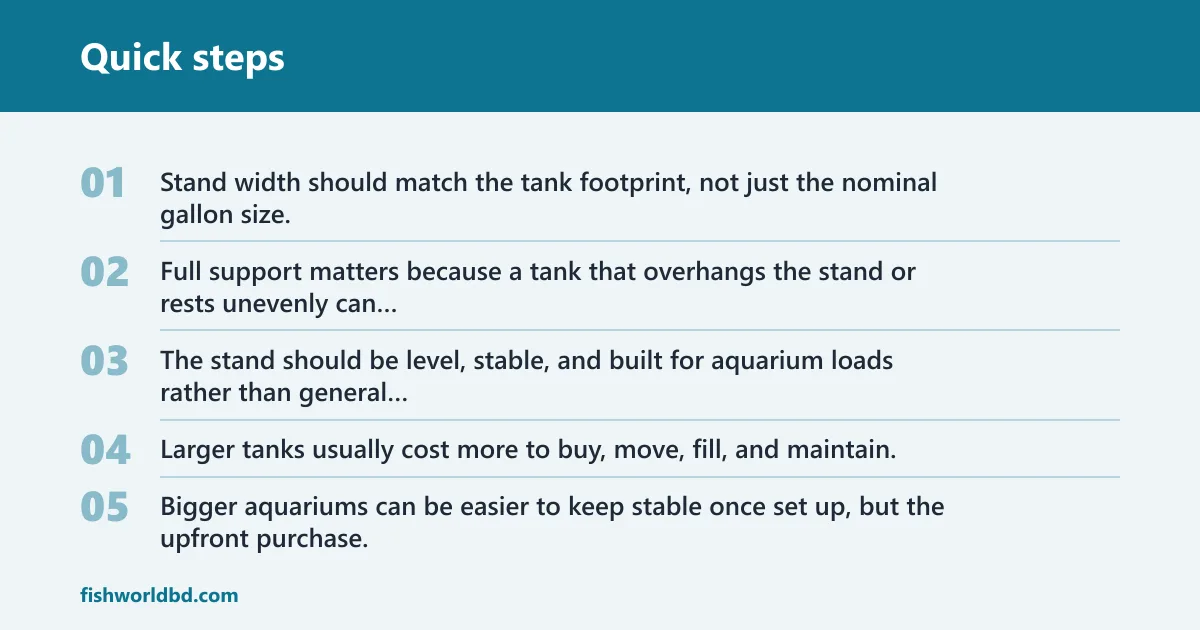
Stand width should match the tank footprint, not just the nominal gallon size. Full support matters because a tank that overhangs the stand or rests unevenly can create stress points in the glass or acrylic base. The stand should be level, stable, and built for aquarium loads rather than general furniture use.
Budget also matters. Larger tanks usually cost more to buy, move, fill, and maintain, and the stand is part of that cost. Bigger aquariums can be easier to keep stable once set up, but the upfront purchase, floor planning, and service access all rise with size.
Outlet access, window exposure, and workflow
Check where the electrical outlet sits before you set the tank down. You want clean cord routing, easy access to the filter and heater, and enough room to lift lids or nets without hitting a wall. Water-change workflow matters too, because a tank that is hard to reach gets harder to maintain.
Window exposure deserves a quick look as well. Direct sun can raise algae pressure and temperature swings, so placement near bright glass needs more caution than placement on an interior wall. Keep the tank where you can service it without moving furniture every week.
What size aquarium is best for beginners?
For many beginners, a 10- to 20-gallon tank is a practical starting point if the room, stand, and budget allow it. Smaller tanks are cheaper and easier to place, but they can swing faster if care is inconsistent. Bigger tanks are often more stable to maintain, yet they need more support and more planning.
Choosing by room and routine
The best beginner size is the one that fits your space, your budget, and your maintenance routine without forcing shortcuts. A 5- to 15-gallon aquarium can often sit on a properly rated support surface, but the stand or furniture must be designed for the load. Do not assume a household table or dresser is enough.
Suppose you want a 20-gallon tank for a small apartment. If the floor space is tight, the 20 gallon long may fit the wall better than the 20 gallon high, but the long format also changes the route through the hallway and the stand width you need. The right choice depends on the room, not just the gallon number.
Frequently asked questions
How much does an aquarium weigh when filled?
A filled aquarium usually weighs close to 10 pounds per gallon once you include water, empty tank weight, substrate, and decor. Water alone weighs 8.34 pounds per gallon, so the finished setup is always heavier than the water estimate by itself. Exact totals vary by size and materials.
What is the weight of a 55 gallon aquarium?
A 55-gallon tank is listed at 78 lb empty and 550-600 lb total. That makes it a very different move and placement problem from an empty tank on paper. Before buying, check the stand footprint, floor support, and route into the room.
How do I calculate aquarium weight before buying?
Use this formula: tank empty weight + (gallons × 8.34) + substrate + hardscape + equipment. That gives you a practical setup estimate for load planning. If you do not know the empty weight, check the manufacturer’s listing for your exact model before you commit.
Can my floor hold a large aquarium?
A large aquarium may be fine on one floor and a bad fit on another. Upper floors need extra caution, and tank placement should run perpendicular to joists when possible. If the setup is heavy, oversized, or near a span center, get structural confirmation before purchase.
What is the difference between 20 gallon long and 20 gallon high?
Both hold the same nominal volume, but the footprint changes. The 20 gallon long spreads water across more floor length and less height, while the 20 gallon high uses less length and more vertical space. That affects stand fit, room layout, and maintenance access.
How much does an empty glass aquarium weigh?
Empty glass aquarium weight varies by size, trim, and style. As reference points, a 10-gallon tank is listed at 11 lb empty, a 55-gallon tank at 78 lb empty, and a 125-gallon tank at 200 lb empty. Exact weights differ by manufacturer and construction.
How much does an acrylic aquarium weigh compared with glass?
Acrylic is lighter than glass for the same size, so it can be easier to carry and position. That said, the filled setup still needs the same water, substrate, and equipment support. Check the manufacturer’s listing for the exact empty weight, because trim and style change the number.